Circulation Pump Installation Diagram – A Guide for Heating Systems
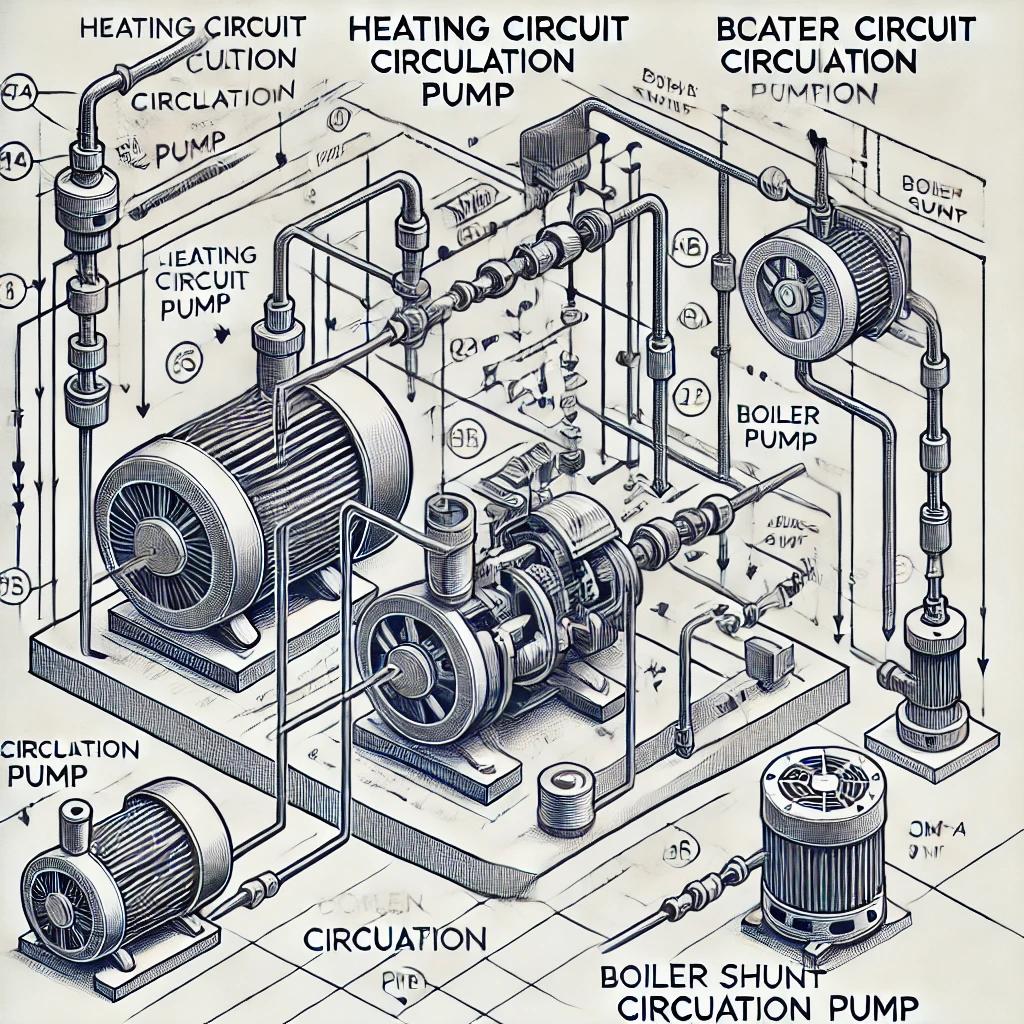
Circulation Pump Installation Diagram
Circulation (recirculation) pumps used in heating systems are installed at different points in the system depending on their intended purpose. Below are the detailed installation points for different applications.
1. Heating Circuit Hot Water Circulation (Recirculation) Pump
This pump is connected to the boiler outlet and the radiator supply line, ensuring the circulation of hot water in the system. This helps maintain a consistent water temperature in the radiators and ensures efficient heat distribution.
2. Domestic Hot Water - Boiler Circuit Circulation Pump
This pump is used in the boiler system that prepares hot water for the building. It transfers and circulates the heat needed by the boiler from the boiler's heating circuit to the internal serpentine coil of the water heater. The pump is installed on the line between the boiler outlet and the boiler inlet.
3. Boiler Shunt (Short Circuit) Pump
In heating boilers, minimizing temperature differences within the boiler body is crucial for its longevity. If a shunt pump is not used, water leaving the boiler at 90°C will return at 70°C, creating a temperature difference (∆T) of 20°C. This significant temperature difference causes localized hot and cold spots inside the boiler, leading to structural deformations over time. By using a shunt pump, the temperature difference between the outgoing and returning water is reduced to lower values (e.g., 10°C), preventing damage to the boiler.