Heating and Cooling Systems: A Comprehensive Guide for Comfort and Efficiency
Introduction
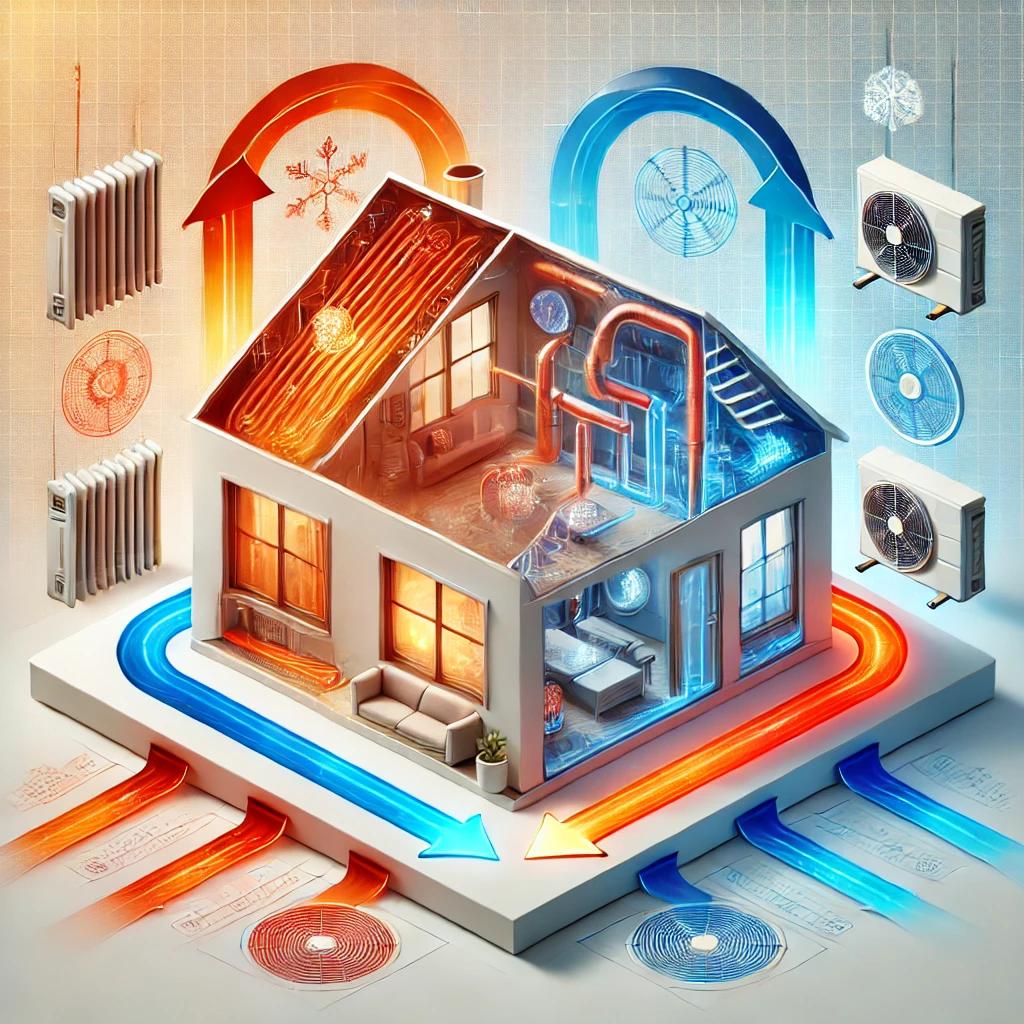
Heating and cooling systems are essential technologies that ensure comfort in our living spaces. From homes to industrial facilities, these systems play a crucial role in energy efficiency, cost management, and environmental impact. In this article, you will find detailed information about different types of heating and cooling systems, their working principles, advantages, and selection criteria.
1. What Are Heating and Cooling Systems?
Heating and cooling systems are mechanical systems that regulate indoor temperature to create a comfortable environment. They provide heating during winter and cooling during summer to adapt to seasonal conditions.
2. Heating Systems
Heating systems increase indoor temperature to provide comfort in cold weather conditions. They come in different types based on their usage and energy source.
2.1. Central Heating Systems
- Radiator (Boiler) Systems: A common system where hot water is distributed to radiators.
- Combi Boiler Systems: Used in small and medium-sized homes for independent heating and hot water supply.
- Central Boiler Systems: Suitable for large apartment buildings, residential complexes, and commercial areas.
2.2. Regional and Underfloor Heating Systems
- Underfloor Heating: Provides even heat distribution through pipes installed beneath the floor.
- Heat Pump Systems: Extract energy from the environment to provide heating with high energy efficiency.
3. Cooling Systems
Cooling systems are used to keep indoor spaces cool during the summer. They typically operate using electrical energy and come in different types.
3.1. Air Conditioning Systems
- Split Air Conditioners: Used for individual cooling in homes and offices.
- Central Air Conditioning Systems: Suitable for large buildings and work in integration with ventilation systems.
- VRF Systems: Energy-efficient air conditioning systems that offer flexible use for large spaces.
3.2. Chiller (Water-Cooled) Systems
Commonly used in industrial facilities and large commercial buildings, these systems operate using water-based cooling technology.
4. Selection Criteria for Heating and Cooling Systems
When choosing heating and cooling systems, the following factors should be considered:
- Energy Efficiency: Systems with low energy consumption should be preferred.
- Size of the Area: Individual systems are suitable for small spaces, while central systems work better for larger areas.
- Installation Cost: The initial investment and long-term operating costs should be evaluated.
- Ease of Maintenance and Use: Systems that require regular maintenance should be chosen.
- Environmental Impact: Eco-friendly systems with a low carbon footprint are recommended.
5. Energy-Efficient and Eco-Friendly Heating and Cooling Systems
Energy-saving and environmentally friendly heating and cooling systems are becoming increasingly popular. Some of the best options include:
- Heat Pumps: Provide high efficiency by using natural energy sources.
- Solar Heating Systems: Offer eco-friendly and cost-effective solutions in the long term.
- Smart Thermostats: Optimize heating and cooling processes for energy savings.
Conclusion
Heating and cooling systems are essential not only for creating comfortable living spaces but also for energy conservation. Choosing the right system reduces costs while minimizing environmental impact. With advancing technology, more efficient and eco-friendly heating and cooling solutions are becoming available. By opting for energy-efficient solutions, you can enhance your comfort while protecting the environment.