Pump Characteristic Curve, Selection Parameters, and Efficiency Explained
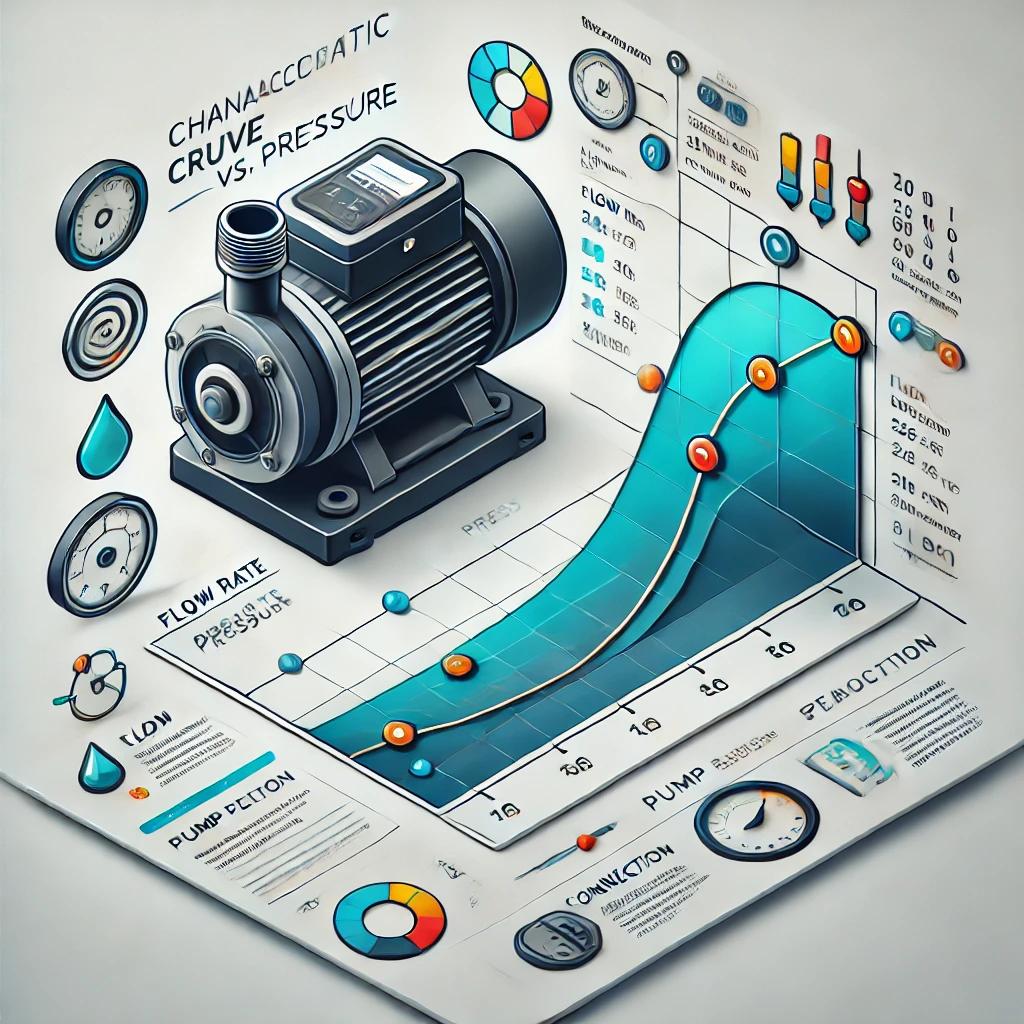
What is the Pump Characteristic Curve?
The pump characteristic curve illustrates how a pump behaves based on flow rate (capacity) and pressure variations. This curve is critical for determining the pump's operational range and limits. Generally, as the flow rate increases, the pressure generated by the pump decreases. This curve is used to optimize system performance and select the right pump, especially in large facilities or industrial applications.
Key aspects of the pump characteristic curve include:
- Flow Rate (Q): The volume of liquid transferred within a given time.
- Pressure (H): The height or pressure the pump can achieve to move the liquid.
- Efficiency (%): The point at which the pump operates at maximum efficiency.
These curves are provided by pump manufacturers and serve as essential guides during pump selection.
What Are the Basic Parameters Required for Pump Selection?
Selecting the right pump is crucial for establishing an efficient and reliable system. Incorrect pump selection can lead to energy loss and system failures. Here are the main parameters to consider:
-
Purpose of Use: The intended use of the pump must be clearly identified, such as:
- Circulation pumps (used in heating and cooling systems).
- Drainage pumps (for wastewater disposal).
- Transfer pumps (for moving liquids between points).
- Booster pumps (to increase water pressure).
-
Flow Rate and Pressure Needs: The system's required flow rate and pressure must be calculated as these are critical for pump selection.
-
Detailed System Information: If the pressure requirement is unknown, detailed information about the piping system, including pipe diameters, lengths, height differences, and resistance elements (valves, filters, etc.), must be provided.
-
Water Tank Location:
- Determine whether the tank is underground or above ground.
- Suction depth and total suction distance should also be measured as these impact the pump's suction capability.
-
Output Pressure Requirement: The minimum and maximum pressure range required by devices or processes at the system's output should be identified.
-
Characteristics of the Liquid to Be Transferred:
- The viscosity, density, and chemical composition of the liquid are critical.
- For chemical, abrasive, or high-temperature liquids, pumps made from special materials should be used.
-
Pump Standards: Any specific standards required by the user (e.g., ATEX certification, food-grade pumps) must also be considered.
-
Electric Power Supply Type: The power supply for the pump should be evaluated, such as:
- Single-phase (monophase).
- Three-phase (triphase).
-
Pump Connection Diameter: The pump must fit the pipe diameter for proper connection. An incorrect connection diameter can reduce system efficiency.
-
Pump Protection Class (IP): This indicates the pump's resistance to external factors such as dust and water. For example, an IP68 pump can operate underwater, while an IP55 pump is resistant to water splashes.
What is Pump Efficiency?
Pump efficiency refers to the ratio of hydraulic power transferred to the fluid to the shaft power supplied to the pump. In simpler terms, it measures how much energy the pump uses to transfer energy to the liquid compared to the energy supplied by its power source.
Mathematically, it is expressed as:
Pump Efficiency (%) = (Hydraulic Power / Shaft Power) × 100
- Hydraulic Power: Relates directly to the liquid's pressure and flow rate.
- Shaft Power: The total power required to operate the pump.
Pump efficiency is a critical parameter for proper pump selection and system performance. High-efficiency pumps save energy, reduce operational costs, and offer an environmentally friendly solution.