What is a Fire Pump? Working Principle and Applications
What is a Fire Pump?
A fire pump is a device that supplies water from a connected source to the fire suppression system at a predetermined pressure. Uncontrolled fires can lead to material losses, casualties, and environmental damage. Therefore, fire pumps play a crucial role in preventing fire escalation in its early stages and ensuring rapid firefighting efforts.
What is the Function of a Fire Pump?
A fire pump ensures a steady water supply at a fixed flow rate and pressure for fire suppression systems. It continuously supplies pressurized water to sprinkler systems, fire hose installations, and hydrant networks. Since fire hazards are always a risk, fire pumps are essential not only for minimizing the danger but also for reducing potential damage during a fire.
How Does a Fire Pump Work?
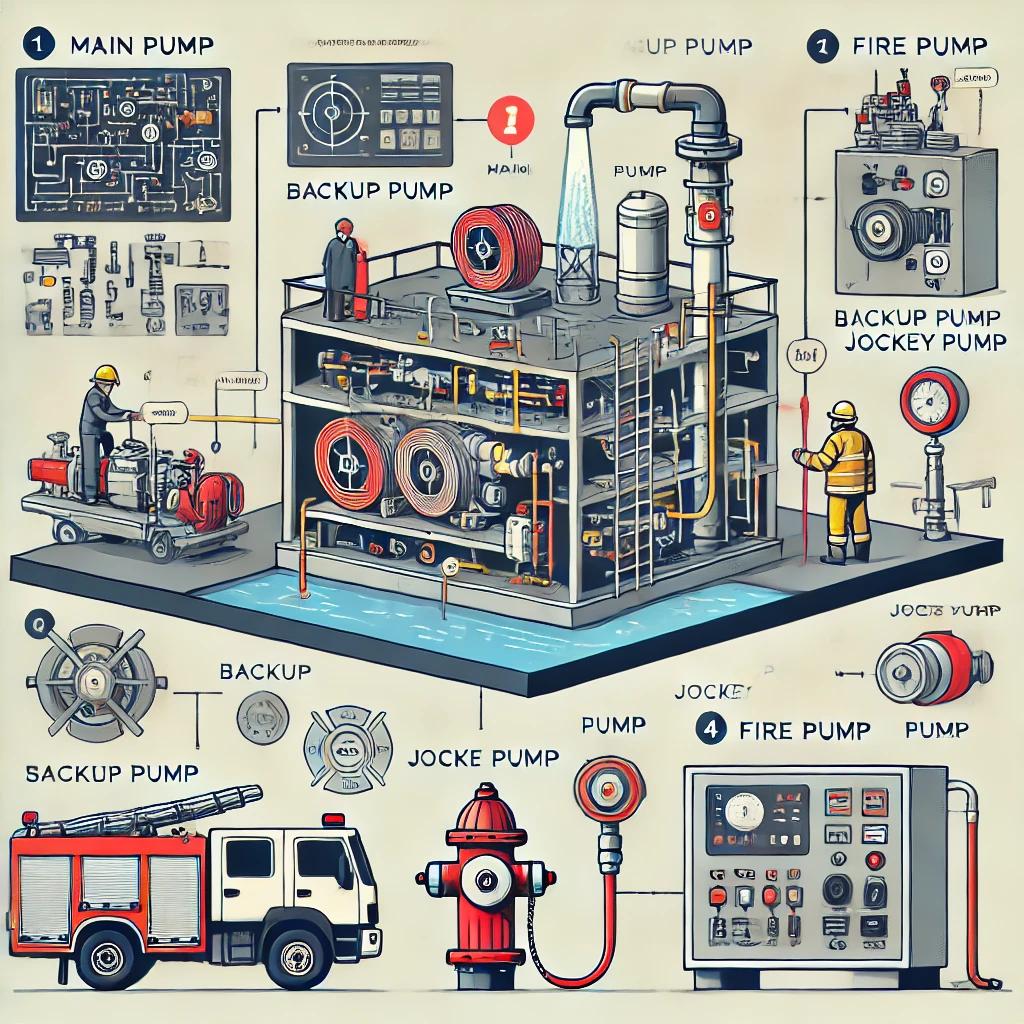
Fire pumps, essential in water-based fire suppression systems, are controlled via a control panel. They operate with diesel or electric motors and generally consist of three main components: the main pump, backup pump, and jockey pump.
-
Backup pump: Activates if the main pump malfunctions, ensuring continuous water supply.
-
Jockey pump: Helps regulate sudden pressure drops, preventing unnecessary activation of the main pump.
When the fire pump is activated, the motor drives the impeller inside the pump, increasing water pressure and supplying it to the fire suppression system.
Where Are Fire Pumps Used?
Fire pumps are widely used in various areas, including residential and industrial buildings:
-
Residential areas (villas, apartments, housing complexes)
-
Industrial facilities
-
Municipal and public buildings
-
Hotels and shopping centers
-
Hospitals and schools
-
Shipyards, marinas, and waste treatment plants
-
Facilities handling chemical and hazardous materials
Additionally, mobile fire suppression systems equipped with pumps are used in emergency response operations.
How to Select a Fire Pump?
Several factors must be considered when selecting a fire pump:
-
Mechanical structure of the fire suppression system
-
Installation area and water source location
-
Water flow rate and pressure requirements
-
Risk level of the area
Choosing the right fire pump with precise calculations ensures maximum efficiency and reduces risks in case of a fire.
Fire Pump Standards
Fire pumps must comply with national and international standards:
-
TS EN 12845+A2 – Automatic Sprinkler System Design, Installation, and Maintenance Standard
-
NFPA 20 – Fire Pump Room Installation Standard
-
UL (Underwriters Laboratories) – US-based independent product safety certification organization
-
FM (Factory Mutual) – One of the world's largest insurance organizations, approving products for fire and disaster risk management
To prevent potential material and human losses, it is crucial to choose a technically sound and certified fire pump tailored to system requirements.