What is Cavitation? Effects and Prevention in Pump Systems
What is Cavitation?
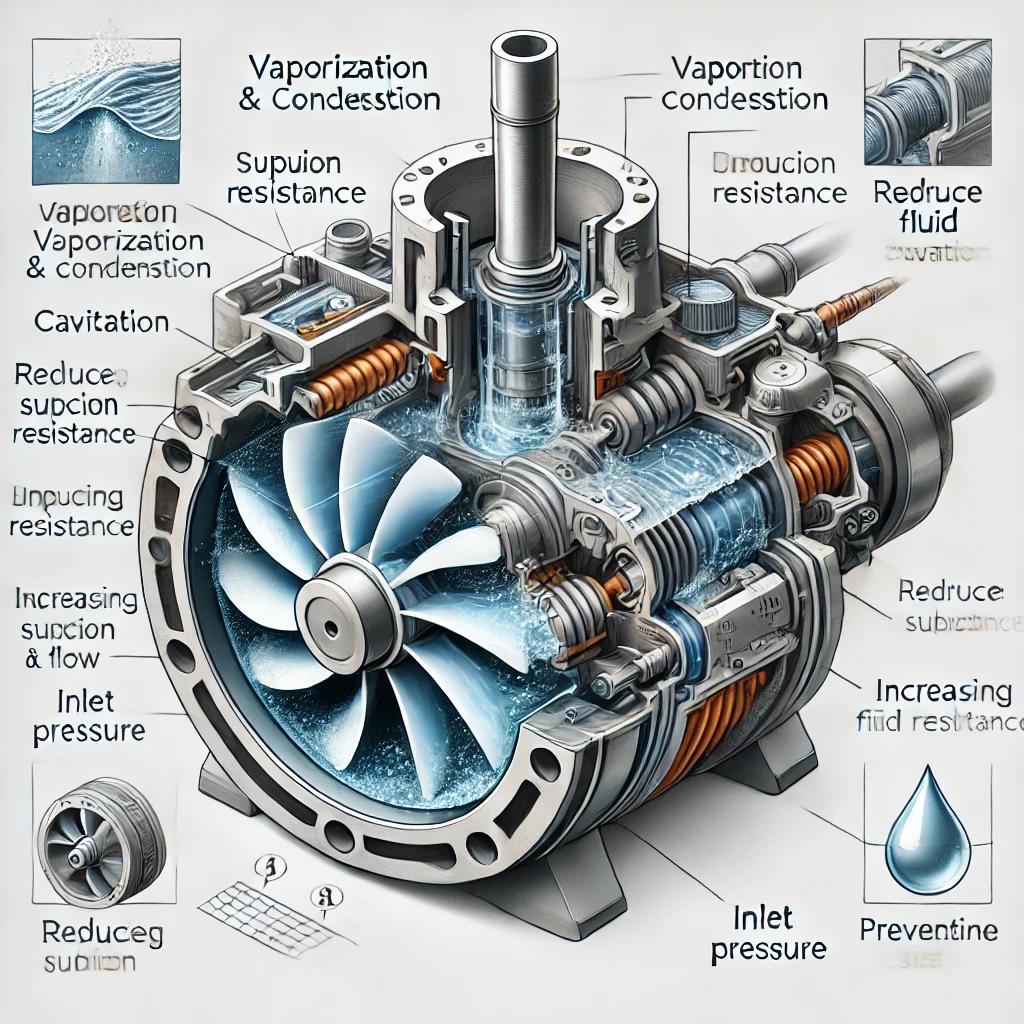
Cavitation refers to the cycle of local vaporization and condensation of a fluid (usually water) inside a pump. This phenomenon adversely affects pump performance and reduces equipment lifespan. To prevent cavitation, accurate calculations of the Net Positive Suction Head (NPSH) are essential. During cavitation, local vaporization and condensation occur within the pump, leading to irregular operation and a drop in discharge pressure.
Cavitation not only diminishes pump performance but also causes severe noise and vibration issues. Prolonged operation under cavitation conditions results in excessive wear on the pump’s metal surfaces, increasing maintenance costs and potentially causing irreparable damage to the pump casing. To mitigate cavitation, it is crucial to reduce resistance in the suction line, increase pressure at the pump inlet, and select the correct pump for the application. Additionally, system design must account for parameters such as water temperature, pressure, and velocity.
Early detection of cavitation and implementing preventative measures are vital for the smooth operation and longevity of pump systems. Regular maintenance and inspections are strongly recommended to ensure optimal performance.