What is Corrosion? Causes and Prevention Methods
2025-01-23 00:14:00
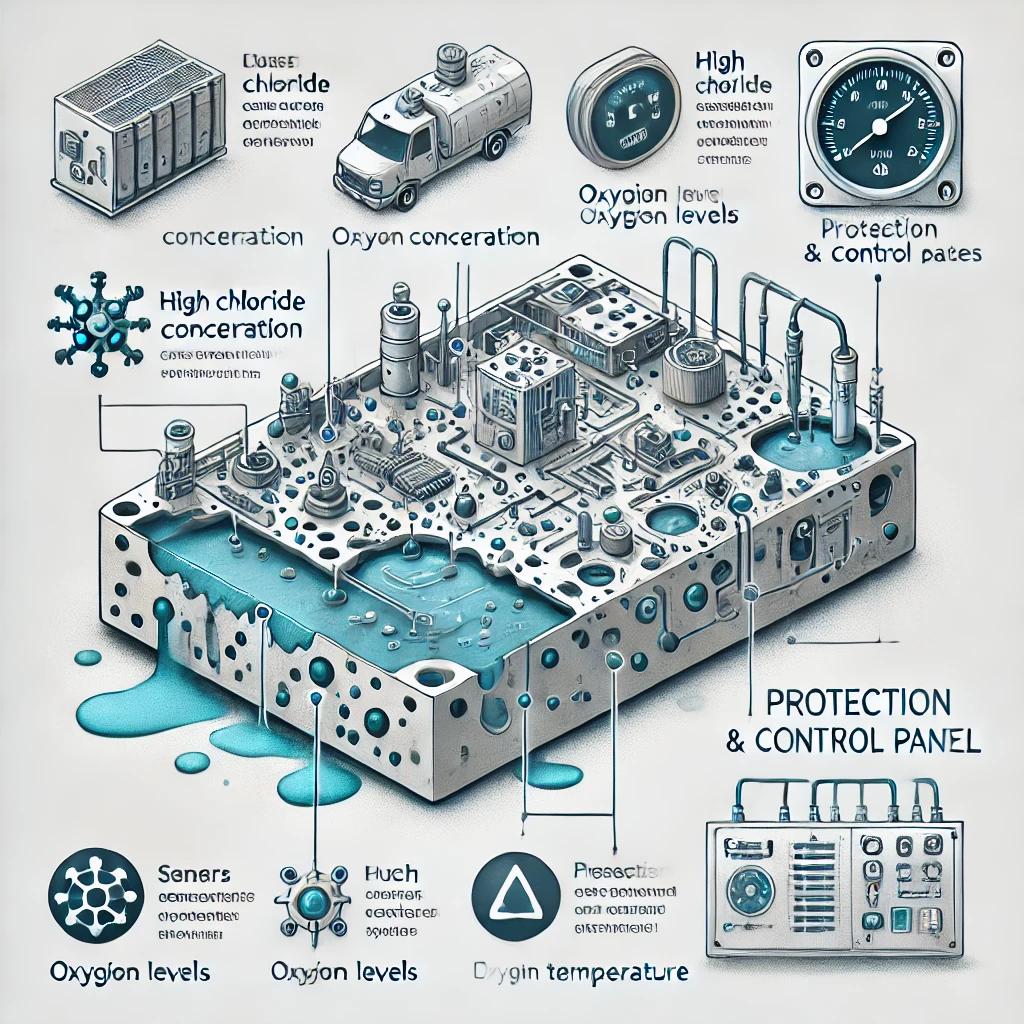
What is Corrosion? Causes and Prevention Methods. Learn what corrosion is, its causes, the impact of fluid temperature, and how protection control panels work to maintain system safety and efficiency.
Corrosion is the degradation of a material due to chemical or electrochemical reactions with its environment. This process, commonly observed in metals, reduces the material’s durability and lifespan. Corrosion is accelerated by factors such as oxygen, humidity, temperature, and chemical substances. In systems where metals like steel come into contact with water, corrosion can lead to significant economic losses and equipment damage. Understanding and preventing corrosion is crucial in industrial applications.
What are the Causes of Corrosion?
- High Chloride Concentration: Causes depolarization and increases the formation of chloride (Cl⁻) ions, which elevates the tendency for material surface wear.
- Low Fluid Resistance: Intensifies the corrosion process, particularly in open systems.
- High Oxygen (O₂) Concentration: Excess oxygen accelerates the corrosion process.
- Fluid Temperature:
- In closed systems: Corrosion rate increases proportionally with temperature.
- In open systems: The corrosion curve behaves inversely parabolically. Initially, higher temperatures lead to increased corrosion. However, beyond a certain point, oxygen solubility decreases, and the corrosion rate declines despite further temperature increases.